

5 Reasons Why Heavy-Duty Forklift Barriers Are Essential for Warehouse Safety
[rank_math_breadcrumb]
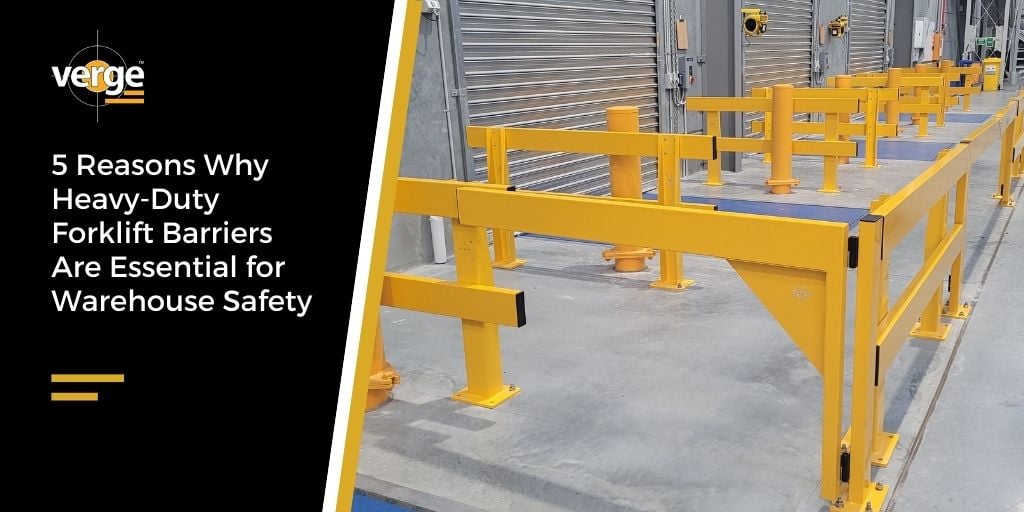
In modern warehouse and logistics environments, forklift operations are both indispensable and inherently hazardous. While forklifts drive productivity, they also introduce significant risk, particularly where pedestrians, racking systems, structural assets and mobile plant operate in shared spaces.
Under the Work Health and Safety Act 2011 (Cth) and corresponding state legislation, a Person Conducting a Business or Undertaking (PCBU) must eliminate risks to health and safety so far as is reasonably practicable, and where elimination is not possible, implement higher-order controls under the hierarchy of control.
Heavy-duty forklift barriers represent an engineering control that materially reduces the likelihood and consequence of collision-related injuries, fatalities and structural damage. They are not decorative infrastructure. They are a compliance-based safeguard grounded in regulator guidance and supported by international crash-test data.
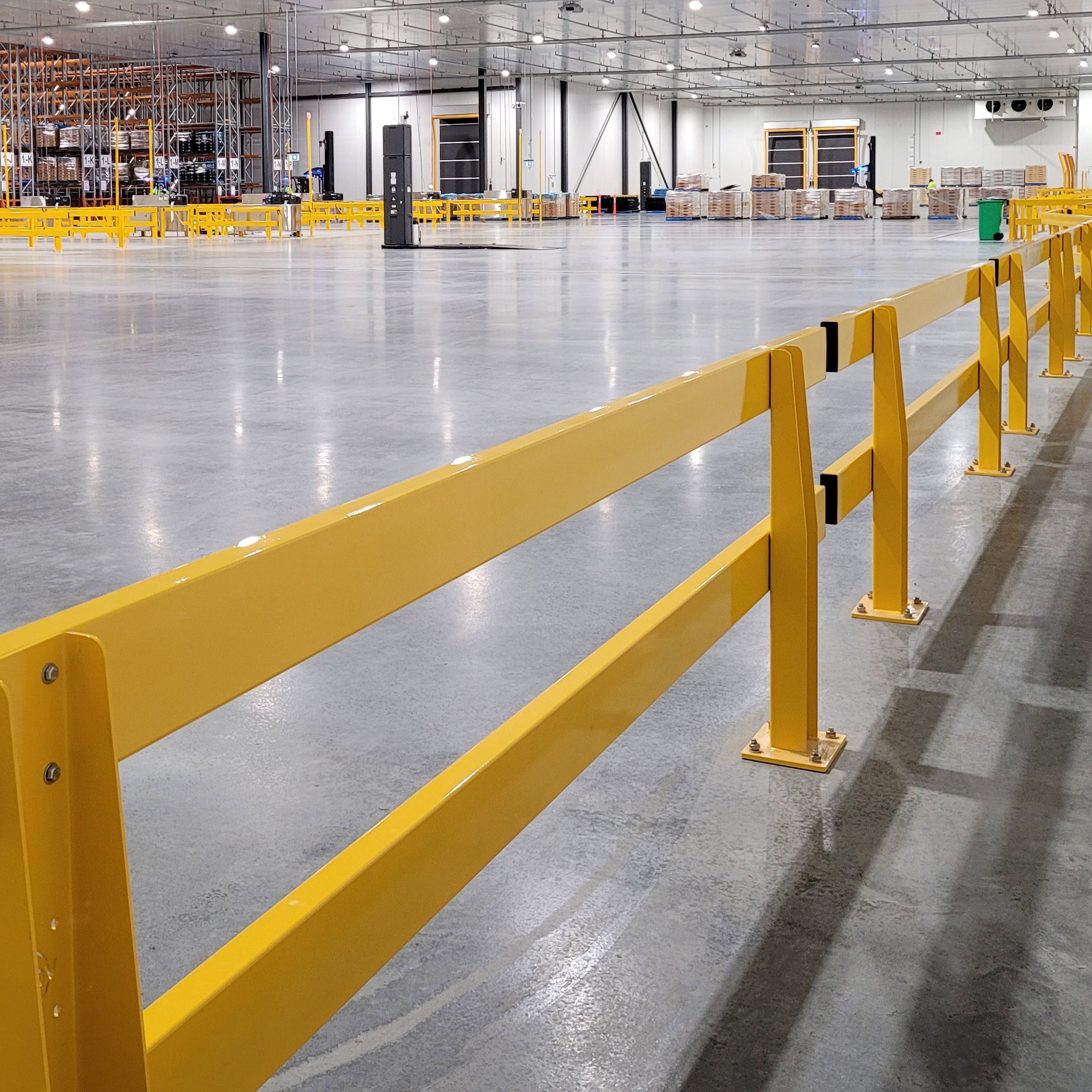
Forklifts are high-risk powered mobile plants with inherent risks, such as collision, overturning and falling loads; known for causing significant damage to facilities, including fatalities and serious injury to pedestrians.
The 5 evidence-based reasons why heavy-duty barriers are essential:
The most significant risk in warehouse operations is pedestrian interaction with forklifts.
Safe Work Australia reports that serious workers’ compensation claims in Australia totalled 139,000+ for 2022-23, with a range of causes including being hit by moving objects and vehicle incidents (which would include forklifts).
Painted lines are administrative controls. Heavy-duty forklift barriers constitute engineering controls. From a legal defensibility perspective, the distinction is critical.
Where pedestrian and forklift interaction is foreseeable, physical segregation is the reasonably practicable response.

Forklifts routinely impact:
Even low-speed impacts can compromise structural integrity. A single damaged column may weaken a load-bearing system and trigger cascading failure.
Heavy-duty barriers absorb or deflect impact energy before it transfers into the structure.
This significantly reduces the likelihood of:
From a WHS compliance standpoint, protecting structures that support work activities forms part of ensuring a safe work environment under s19 of the WHS Act.
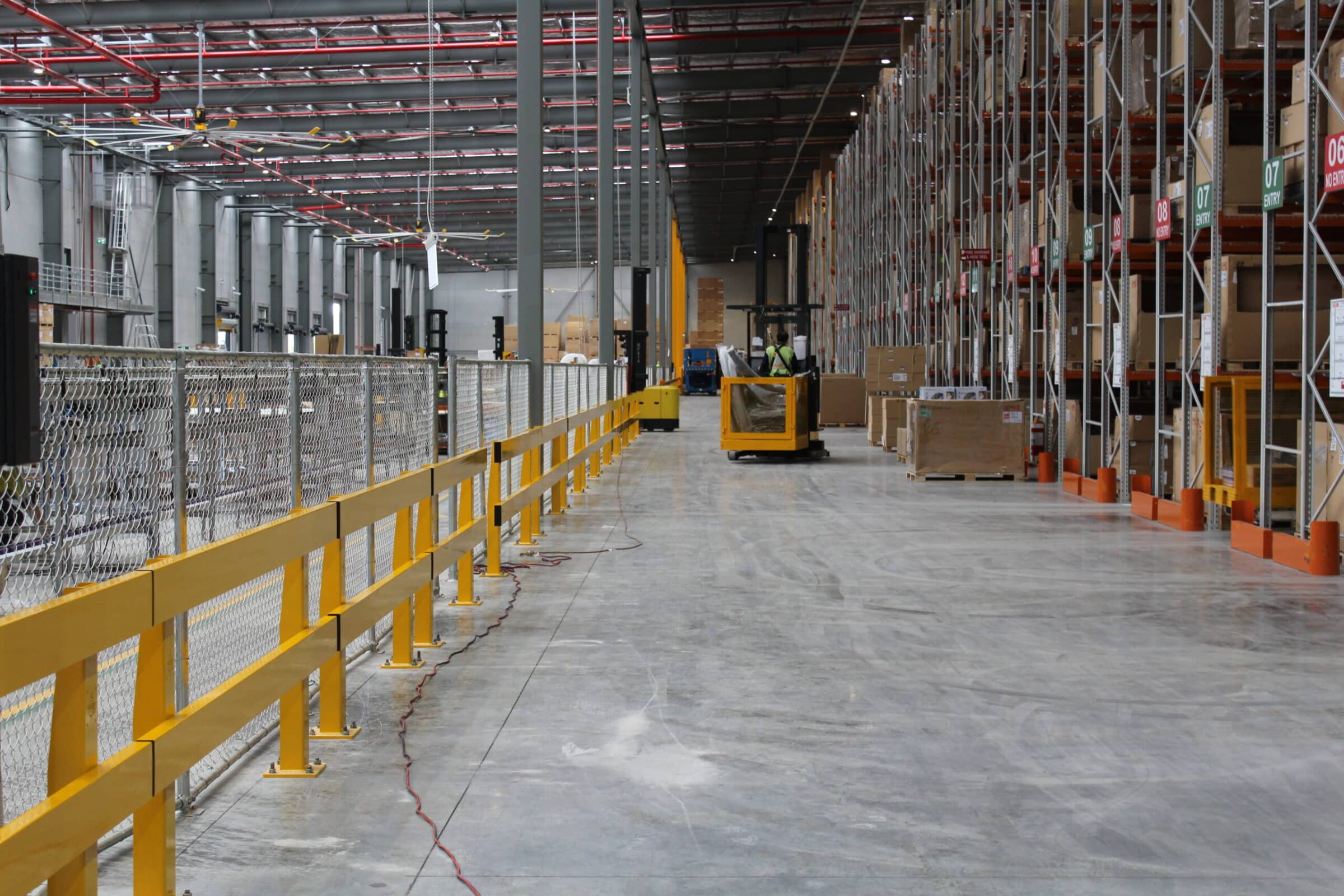
Heavy-duty forklift barriers are engineered to absorb and redirect impact energy before it reaches the structure or personnel behind them. Both steel and polymer barrier systems achieve this through controlled deflection, managing kinetic energy at the point of contact and reducing the severity of secondary damage.
Tested and Certified for Australian Conditions
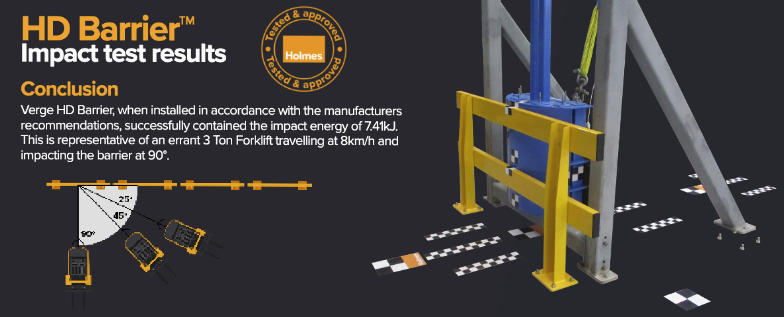
Verge HD Barriers have been independently tested and approved by Holmes. When installed in accordance with manufacturer recommendations, the Verge HD Barrier successfully contained an impact energy of 7.41kJ – representative of a 3-tonne forklift travelling at 8km/h and striking the barrier at 90°. These are real-world conditions relevant to Australian warehouse operations.
Verge’s barriers are designed and manufactured in-house at our Sydney facility, where complete oversight of the production process, from design through to final manufacture, ensures consistent quality and the ability to match solutions to specific site requirements.
Impact-rated barriers are engineered based on:
As the exclusive manufacturer of the most comprehensive range of safety barriers across Australasia, Verge offers both steel and polymer solutions, ensuring the right barrier system is specified for the application, not simply the nearest available product.
Selecting non-tested or non-certified barriers may create a false sense of security and expose the Person Conducting a Business or Undertaking to regulatory scrutiny.
A compliant Traffic Management Plan must identify and control interaction risks between:
Heavy-duty forklift barriers support TMP implementation by:
Regulators routinely cite inadequate physical segregation as a contributing factor in enforcement actions.
Where heavy-duty barriers are integrated into a documented TMP, the Person Conducting a Business or Undertaking demonstrates proactive risk management consistent with legislative obligations.

Every forklift impact incident carry:
If regulators determine that a foreseeable risk existed and higher-order controls were not implemented, prosecution risk increases. Under the WHS Act, penalties for Category 2 and Category 1 offences can reach into the millions of dollars for corporations.
Installing heavy-duty forklift barriers demonstrates that the Person Conducting a Business or Undertaking has:
Operationally, barriers reduce downtime caused by:
Industry door safety research identifies overhead door damage as one of the costliest recurring warehouse repair categories. When evaluated against the cost of a single serious injury claim or structural collapse, barrier systems are financially and legally prudent.
To ensure forklift barriers deliver compliance value, the following steps should be undertaken:
Heavy-duty forklift barriers are not optional enhancements; they are essential engineering controls that directly address one of the most significant risks in warehouse environments: mobile plant interaction.
They:
In a regulatory environment where foreseeable risk must be controlled so far as is reasonably practicable, heavy-duty forklift barriers represent a clear, defensible and evidence-supported safety investment.
Warehouse safety is not achieved through policy alone. It is built through engineered controls that remove the margin for error. Speak with our team to assess your current layout and identify engineered control solutions that fit your site and traffic flow.