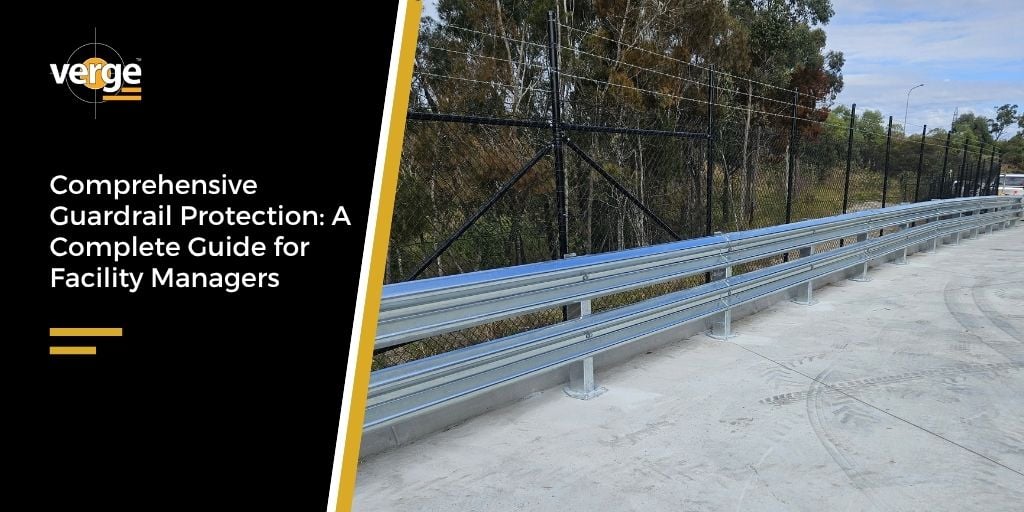


Comprehensive Guardrail Protection: A Complete Guide for Facility Managers
[rank_math_breadcrumb]
Guardrail systems are often viewed as secondary infrastructure, installed late in a project, added reactively after an incident or treated as perimeter hardware rather than critical engineering controls. From a Work Health and Safety (WHS) compliance perspective, that approach is fundamentally flawed.
In warehousing, logistics, manufacturing, healthcare distribution, cold storage and industrial processing environments, guardrails are a primary risk-control measure. They protect pedestrians, shield structural assets, prevent falls from height, define traffic movement and support compliance with statutory obligations under the Work Health and Safety Act 2011 (Cth) and corresponding state and territory legislation.
For Facility Managers, guardrail protection is not simply a design feature, it is a legal operational and financial safeguard. This guide outlines the regulatory framework, risk considerations, system types, engineering requirements and implementation principles necessary to deliver comprehensive guardrail protection across industrial facilities.
Under Section 19 of the WHS Act 2011, a Person Conducting a Business or Undertaking (PCBU) must ensure, so far as is reasonably practicable, the health and safety of workers and others at the workplace. This includes providing and maintaining a work environment that is without risks to health and safety.
Relevant regulatory provisions include:
Guardrails directly address risks arising from:
Safe Work Australia’s Model Code of Practice: Managing the Risk of Falls at Workplaces clearly identifies guardrails as a primary means of fall prevention.
Similarly, SafeWork NSW –Traffic Management in Workplaces emphasises physical barriers as a necessary control for separating pedestrians from mobile plant machinery.
From a compliance standpoint, guardrails constitute a higher-order engineering control within the hierarchy of control. Where risk is foreseeable, physical containment must be considered before administrative measures.
Facility Managers should undertake a structured risk assessment identifying areas requiring engineered containment.
Unprotected dock edges present fall risks exceeding two metres in many facilities. Falls from loading docks remain a recurring cause of serious injury. WorkSafe Victoria identifies guardrails and edge protection as mandatory controls where there is a risk of falling.

AS 1657:2018 (Fixed Platforms, Walkways, Stairways and Ladders -Design, Construction and Installation) specifies guardrail height, load ratings, and design requirements. Failure to comply may expose the PCBU to enforcement action if a fall occurs.
Forklifts account for approximately 1,200 serious injury claims per year in Australia (Safe Work Australia data). Guardrails protect pedestrians from plant encroachment in shared environments. NIOSH research similarly recommends barrier-protected walkways as a primary engineering control.

Impact damage to racking systems is a known precursor to collapse. Guardrails and rack protection systems absorb or deflect impact before force transfers to load-bearing elements. WorkSafeBC’s research identifies structural impacts as a recurring hazard in warehouse operations.

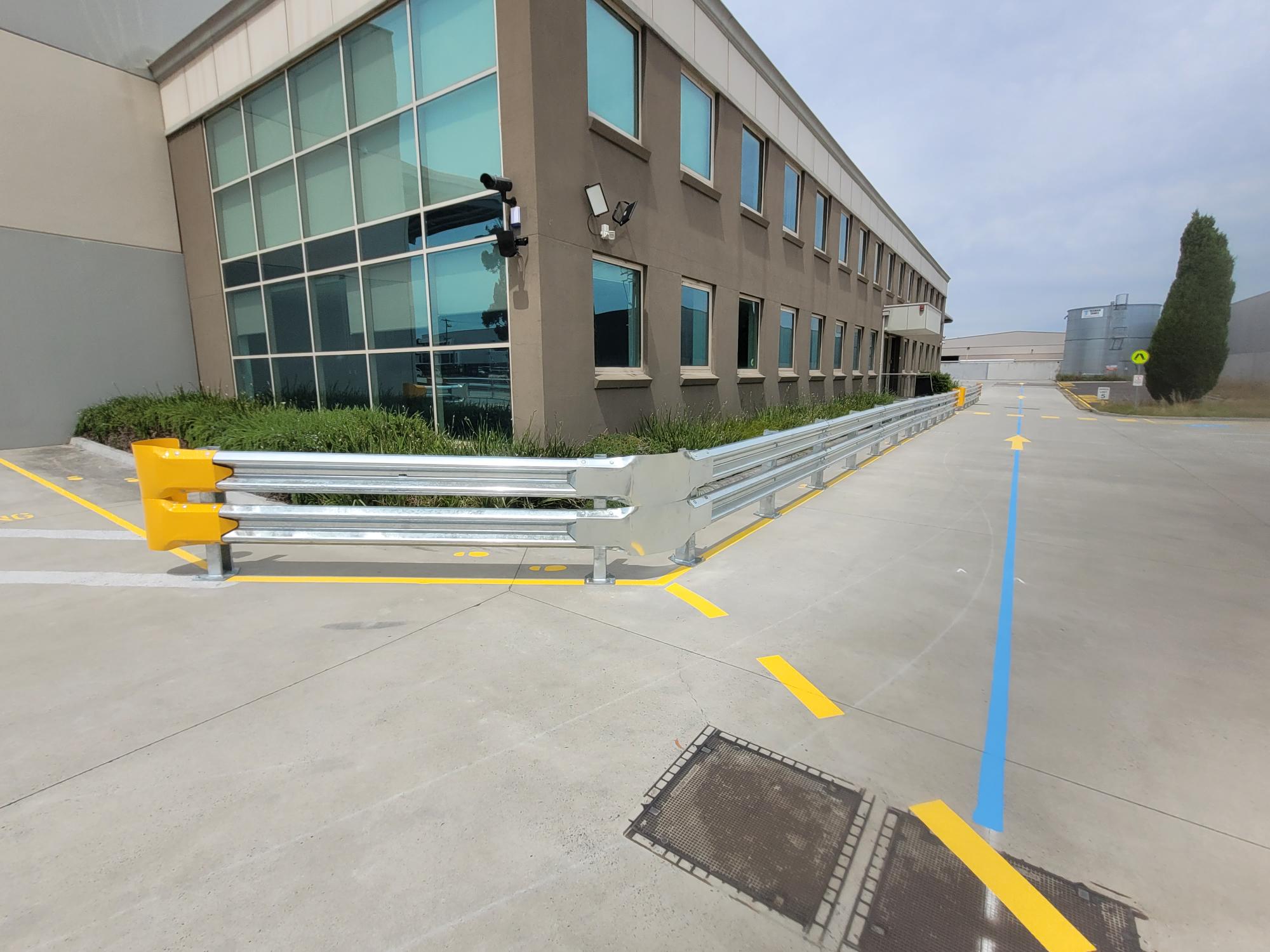
Comprehensive protection requires selecting the appropriate guardrail configuration based on the risk profile of each area. Verge Guard-PRO guardrail systems are tested and certified to AS1170.1, ensuring they meet the structural and impact requirements demanded by Australian industrial environments. The three primary configurations are outlined below.
The Single Guardrail is the standard configuration for light traffic areas where the primary risk is incidental vehicle contact or pedestrian guidance. It provides a cost-effective, space-efficient barrier suited to lower-impact zones such as internal walkways, office interfaces and low-volume traffic lanes. Single Guardrail is the most commonly deployed configuration across general warehouse and logistics environments.
The Double Guardrail configuration is engineered for heavy traffic areas where forklift interaction, high vehicle mass or frequent movement presents a greater impact risk. The addition of a second rail significantly increases the barrier’s structural capacity, distributing impact forces across a greater surface area and reducing the likelihood of penetration or displacement. Double Guardrail is the recommended solution for main traffic corridors, high-frequency forklift lanes and areas adjacent to critical structural assets such as racking uprights and columns.

Where a barrier height of one metre or greater is required, the Single Guardrail combined with a Handrail provides the appropriate configuration. This system is specifically suited to applications requiring fall protection, including pedestrian walkways, mezzanine edges and loading dock surrounds where workers may be exposed to a fall hazard. The integrated handrail meets the height and structural requirements for edge protection, delivering both physical segregation and fall prevention within a single compliant system.
Comprehensive protection requires selecting appropriate systems based on risk profile.
Installed along walkways, these prevent vehicle intrusion into pedestrian zones. They may be steel or polymer, depending on impact requirements.
Guardrails must not be selected purely on appearance or cost. Engineering specification is critical.
Barriers should be rated for:
Selecting under-rated systems may create compliance exposure. Verge Guard-PRO systems are certified to AS1170.1, providing confidence that structural performance has been independently validated.
Concrete slab thickness and reinforcement must support anchor loads. Poor anchoring undermines performance regardless of the barrier’s own rating.
Concrete slab thickness and reinforcement must support anchor loads. Poor anchoring undermines performance regardless of the barrier’s own rating.
AS 1657:2018 specifies minimum guardrail heights, toe board requirements where applicable, and load-bearing standards for elevated platforms and walkways.
While compliance is foundational, guardrail systems also deliver measurable operational benefits.
Damage to door frames, racking and structural columns can halt operations. Guardrails absorb and deflect impact before it reaches these assets, reducing the frequency and cost of structural repairs.
Engineering controls demonstrate proactive risk mitigation, which can positively influence insurance assessments.
Guardrails enforce defined travel lanes and prevent shortcutting, creating more predictable and safer movement patterns across the facility.
Visible engineering controls reinforce the seriousness of site safety expectations and signal organisational commitment to worker protection.
Guardrail placement must align with the facility’s documented Traffic Management Plan (TMP). Key integration steps include:
SafeWork NSW and WorkSafe Queensland both emphasise engineered separation within TMP frameworks.
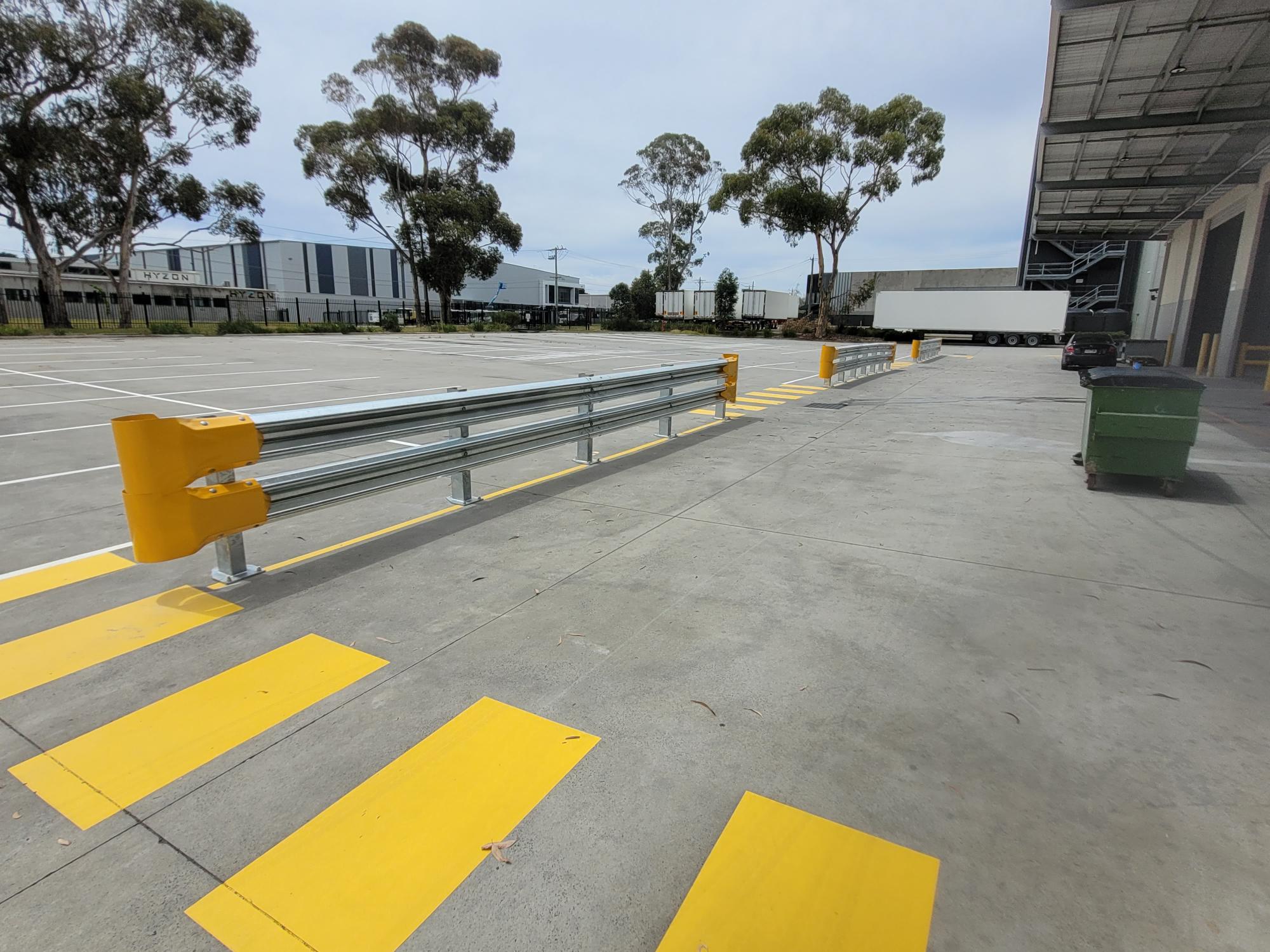
Guardrails must be inspected routinely for:
Damaged guardrails must be repaired or replaced promptly to maintain control effectiveness. WHS Regulation 213 requires plant and structures to be maintained in a safe condition.
Regulators have prosecuted PCBUs where:
Penalties under Category 2 offences can exceed $1. 5 million for corporations. Where a foreseeable risk exists and guardrails were reasonably practicable but not installed, liability exposure increases significantly.
To achieve comprehensive guardrail protection:
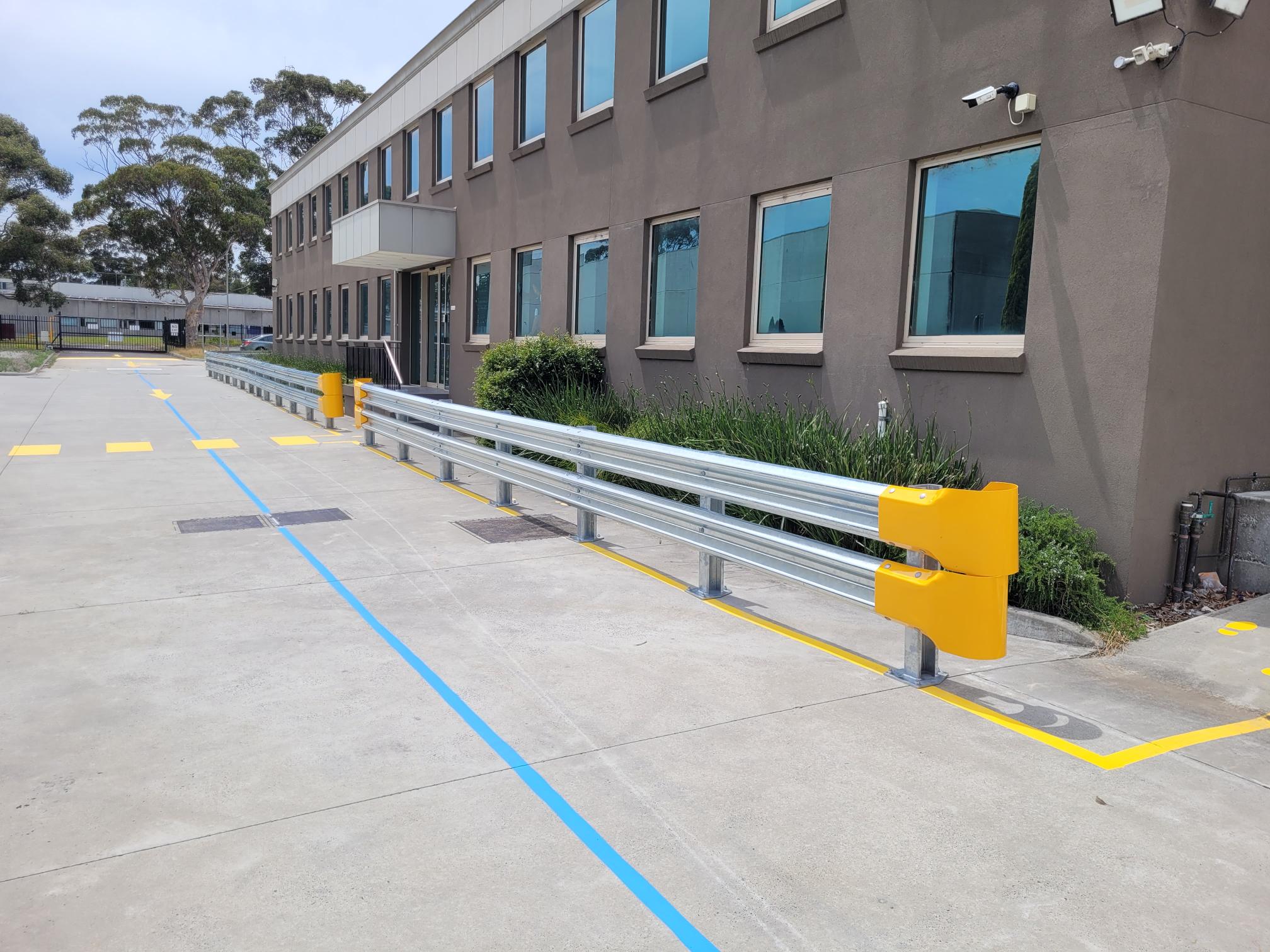
Comprehensive guardrail protection is not cosmetic infrastructure, it is a fundamental engineering control that protects people, plant and structures within industrial facilities.
For Facility Managers operating under WHS legislation, guardrails:
In environments where vehicle movement, elevated platforms and structural loading are routine, the absence of engineered guardrail protection is not merely an oversight, it is a foreseeable risk.
Comprehensive guardrail protection demonstrates due diligence, strengthens compliance defensibility and, most importantly, safeguards workers from preventable harm.
Verge heavy-duty forklift barriers and modular Eco-rail give facility managers a proven, AS1170.1-certified solution for separating pedestrians from vehicle traffic, built to meet your workplace safety obligations.