

Pedestrian Safety Barriers: Creating Safe, Segregated Walkways in Industrial Facilities
[rank_math_breadcrumb]
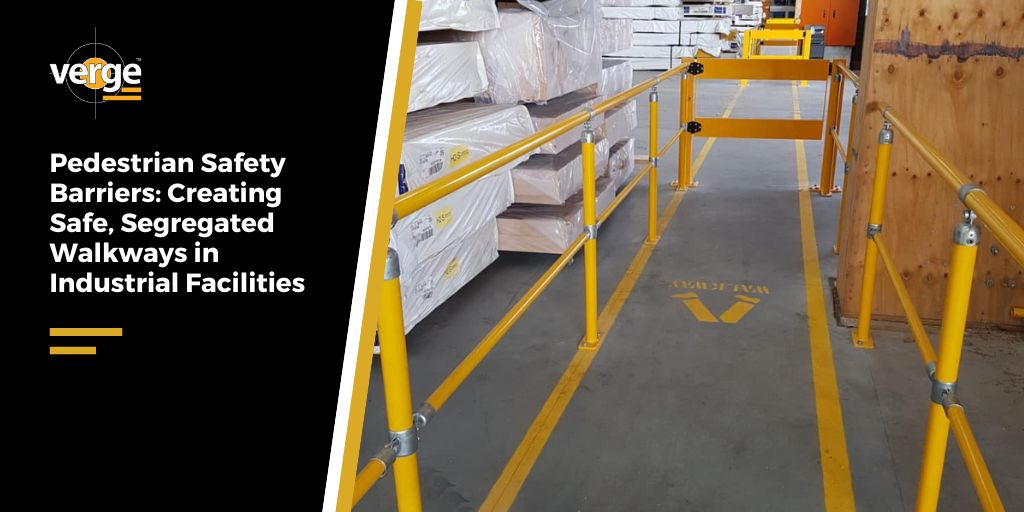
Pedestrian safety remains one of the most critical and frequently neglected components of effective risk management in industrial environments. Whether the workplace involves distribution centres, manufacturing plants, processing facilities or logistics hubs, the interaction between pedestrians and mobile plant continues to be a leading cause of severe injury and fatality across Australia.
The legal obligation on a Person Conducting a Business or Undertaking (PCBU) under the Work Health and Safety Act 2011 (Cth) is established unequivocally: pedestrians must be protected from the risks posed by mobile plant so far as is reasonably practicable.
Pedestrian safety barriers are one of the most effective higher-order controls in achieving safe segregation and reducing predictable, repeatable interaction risks between workers and industrial vehicles.

Under WHS Act s19(3) and WHS Regulation Part 4. 2 (Mobile Plant), a Person Conducting a Business or Undertaking (PCBU) must:
Regulators across Australia consistently emphasise physical separation as the most reliable method to prevent pedestrian-plant contact:
Australian work health and safety guidance is clear that physical separation between pedestrians and mobile plant is a fundamental risk control, not an optional measure. SafeWork NSW, in its guidance on traffic management in workplaces, states that physical barriers must be used wherever practicable to separate mobile plant from pedestrians, reinforcing the primary duty of care under section 19(3) of the WHS Act and the specific requirements of WHS Regulation Part 4.2 relating to mobile plant.
WorkSafe Victoria further confirms that designated pedestrian walkways protected by physical barriers provide a significantly higher level of protection than painted lines alone, which rely on human behaviour rather than engineered control. Consistent with this approach, Safe Work Australia’s Model Code of Practice: Managing Risks of Plant requires duty holders to consider physical containment systems such as guardrails, bollards and traffic barriers to prevent pedestrians from entering mobile plant operating zones and being exposed to serious collision risks.
This regulatory expectation is consistent and clear: segregation is not optional.
Industrial facilities are high-risk areas with both pedestrian and vehicular movement and safety management is crucial.
Some examples of risk and the impact:
Research shows that uncontrolled interaction points are where most serious incidents occur.
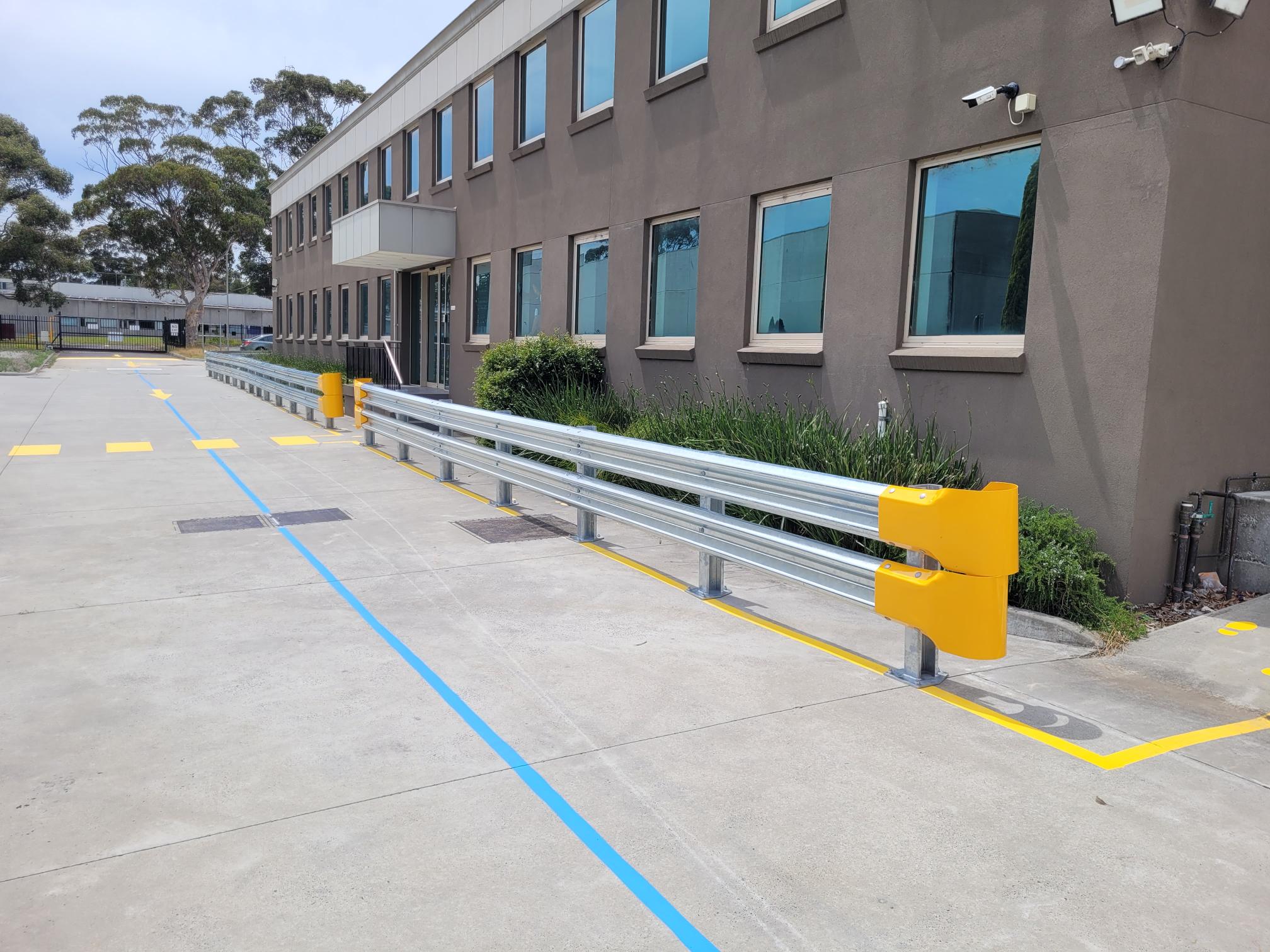
The purpose of safety barriers and the outcomes they achieve in industrial facilities:
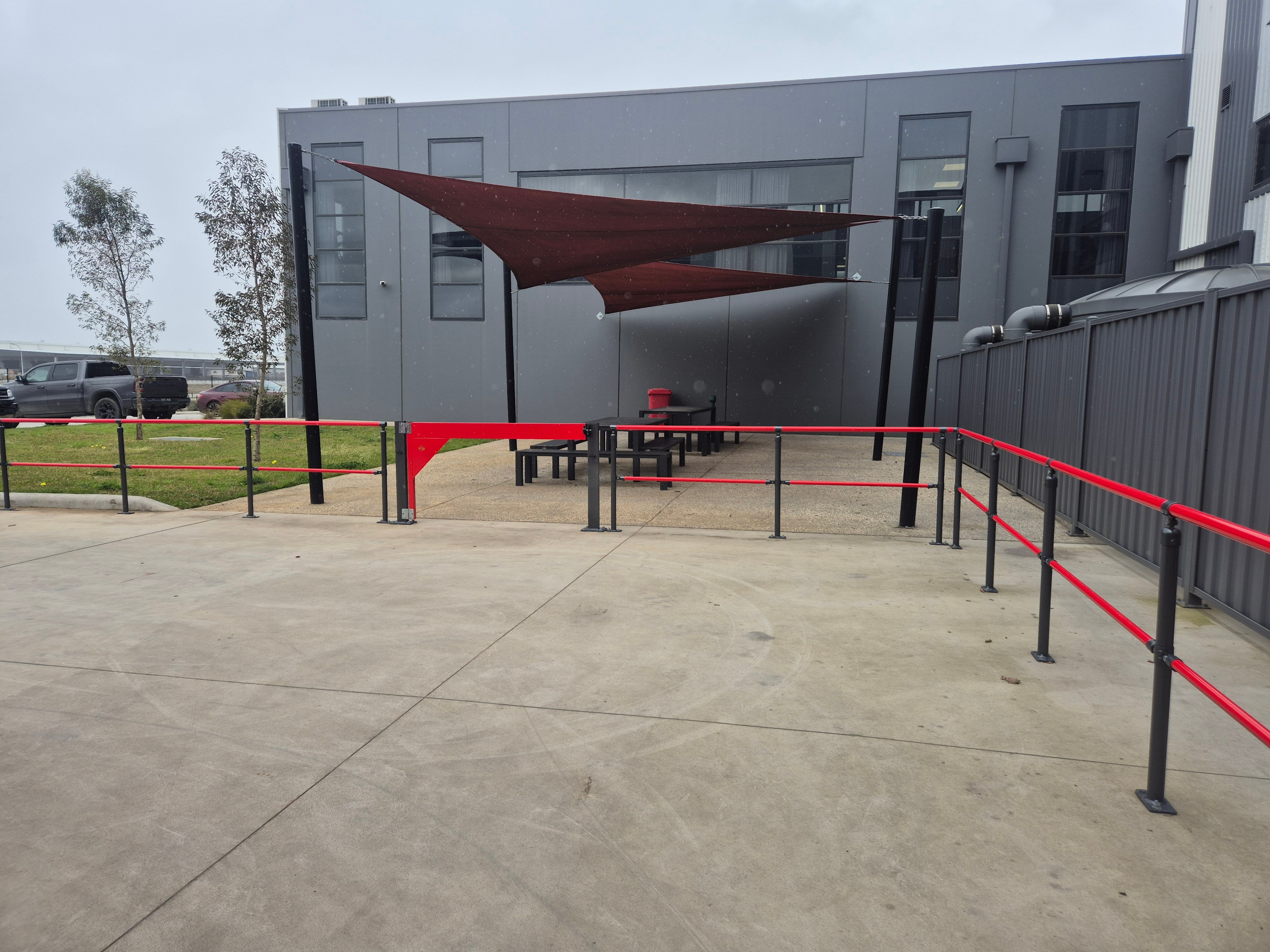
International safety regulators and industry bodies consistently confirm that physical separation is one of the most effective controls for managing pedestrian and vehicle interaction risks.
The UK Health and Safety Executive (HSE), through its workplace transport research, demonstrates that physical segregation significantly reduces collision likelihood when compared with administrative controls alone.
Similarly, WorkSafe BC’s guidance on lift truck safety identifies barrier-protected pedestrian walkways as one of the most effective measures for preventing serious and fatal vehicle-pedestrian incidents.
In the United States, NIOSH recommends the use of dedicated walkways protected by physical barriers as a primary engineering control to prevent pedestrian injuries involving mobile plant.
This regulatory guidance is supported by independent impact testing, including McCue Corporation data showing that polymer barrier systems absorb impact energy, reduce structural damage and protect pedestrians and certified crash-test results from the A-SAFE Impact Testing Centre in the UK, which document the performance and effectiveness of industrial pedestrian safety barriers under controlled collision conditions.
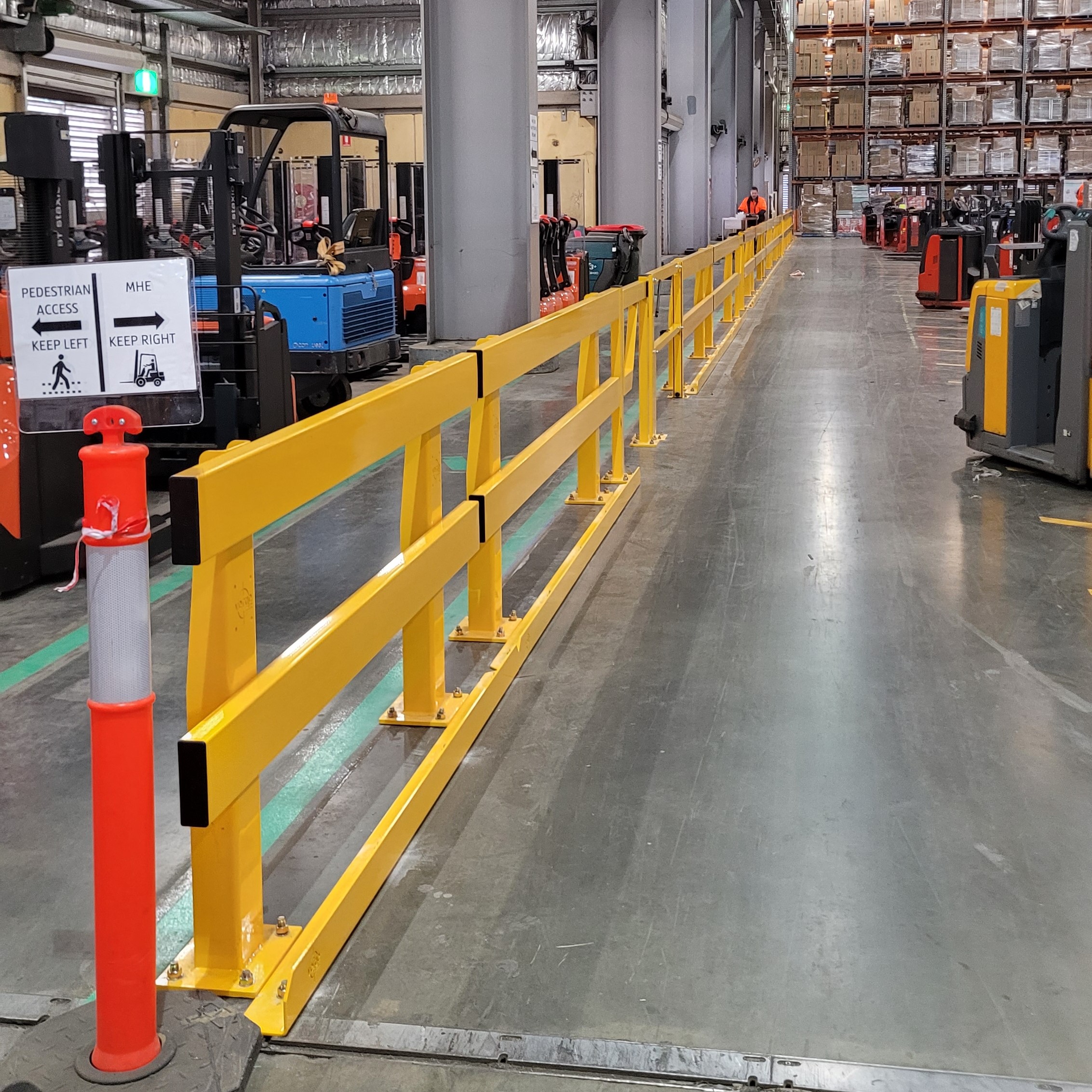
Verge Safety Barriers offer a range of quality products that help to achieve the outcomes required to mitigate and address the risk found in industrial facilities:

Pedestrian safety barriers are not a convenience, they are a reasonably practicable, legally defensible, and evidence-based control measure that significantly reduces the risk of mobile-plant-related injury or fatality in industrial settings.
For any facility operating forklifts, reach trucks, AGVs or heavy vehicles, segregated pedestrian walkways protected by engineered barriers must form the backbone of a compliant Traffic Management Plan.
Failure to physically segregate pedestrians is not only unsafe, but it also exposes the PCBU to legal, operational and reputational consequences that are entirely avoidable.
Talk to the team at Verge Safety Barriers for practical advice and compliant pedestrian barrier solutions built for Australian worksites.